Sponsered

Sunday, February 17, 2019

Гэрлийн хүн буюу Тесла

UBS телевизийн кино албанд хөрвүүлсэн Никола Тесла -н тухай баримтат кино. 

Никола Тесла (1856 оны 7 дугаар сарын 10-нд төрж, 1943 оны 1 дүгээр сарын 7-нд нас барсан) нь зохион бүтээгч, механик болон цахилгааны инженер байсан. Тэрээр цахилгаан үйлдвэрлэлийн салбарыг үүсэхэд хамгийн том хувь нэмэр оруулсан хүн гэгддэг бөгөөд XIX зууны сүүл, XX зууны эхэн үед цахилгаан соронзны салбарт хувьсгал хийсэн олон бүтээл, нээлт хийснээрээ хамгийн алдаршсан. Теслагийн патентууд болон онолын бүтээл нь орчин үеийн хувьсах гүйдлийн цахилгаан тэжээлийн системийн үндэс суурийг тавьсан. Үүний дотор цахилгаан түгээлтийн олон фазат систем, хувьсах гүйдлийн мотор бүтээсэн нь Аж үйлдвэрийн хоёрдугаар хувьсгал гарахад түлхэц өгчээ. 

Өнөөгийн Серби нутаг дэвсгэрт Серби хилийн цэргийн ойролцоо Смилян тосгонд серб үндэстний гэрт төрсөн тул Австрийн Эзэнт гүрний харъяат байсан бөгөөд сүүлд АНУ-ын иргэн болжээ. 1894 онд радиогоор утасгүй холбооны боломжийг үзүүлж, "Гүйдлийн дайн"-д ялагч болсныхоо дараа, тэрээр Америкт ажиллаж байсан хамгийн аугаа цахилгааны инженерийн нэг гэж өргөн олонд хүндлэгдэх болсон.Түүний эхэн үеийн бүтээлийн ихээхэн хэсэг нь орчин үеийн цахилгаан техникийн анхдагч бүтээлүүд болсон бөгөөд түүний хийсэн олон нээлт нь асар том өөрчлөлт авчирсан юм.

 Энэ үед АНУ-д Теслагийн алдар нэр бусад аугаа зохион бүтээгч, эрдэмтний нэр алдартай зэрэгцэж байсан боловч, этгээд зан, шинжлэх ухаан, технологийн дэвшлийн талаар итгэмээргүй, заримдаа хачин гэмээр санаа гаргадаг байсан учраас Тесла эцэстээ нүд үзүүрлэгдэж, "галзуу эрдэмтэн" гэгдэх болжээ. Тесла санхүүгийн байдалдаа төдийлөн их анхаардаггүй байсан учраас 86 насандаа нас барах үедээ ядуу тарчиг амьдралтай болсон байсан гэдэг. 

Хүн төрөлхтний 90 хувь нь тогтолцооны боол болсон

Бид эд хэрэгцээний дарлалд, бүрэн хяналтан дор амьдарч байна. Тэд оюун ухаанд маань нэвтэрч, дуулгавартай байхаар программчилжээ.
Илбэчин, “шидтэн”-үүд биднийг хуурахын тулд анхаарал сарниулах мэх хийдэг. Танхимд цугларсан хүмүүс илбэчний сарниулах мэхийг ажиглаж байх хооронд шидтэн жинхэнэ хууран мэхлэлтийг цаагуураа хийж байдаг. 
Хүмүүс төөрөгдөл, хууран мэхлэлтийн ертөнцөд амьдарч байна. Бидний санаа зовоож буй ихэнх асуудлыг хэн нэгэн бодож олоод, толгойд маань суулгачихсан. Товчхондоо бид нийгмийг давамгайлж буй авторитар эвлэлийн хохирогчид болчхож.
Нийгмийн оройд байгаа хүмүүс биднийг бодитоор сэтгэхэд саад болдог. Тэд нийгмийн сүлжээ ашиглан тархи угааж байна. Тэдний хийсэн хамгийн хортой үйлдэл бол маргаашдаа итгэх итгэлийг минь үгүй хийсэн явдал. Бидний амьдрал хий хоосон зүйлийн араас хөөцөлдөх, бусдын үзэл бодлыг эсвэл хэн нэгэн хүн, байгууллагын гаргасан номлолыг үг дуугүй дагах гэсэн зохион байгуулалтад орчихож. 

Бид боолчлогдсон байна 
Бид эд хэрэгцээний дарлалд, бүрэн хяналтад амьдарч байна. Тэд бидний оюун ухаанд нэвтэрч, дуулгавартай байхаар прогроммчилилжээ. Дараах зургаан төөрөгдлөөс ангижирснаар эрх чөлөөг олж авах боломжтой:

1. Хууль, хэв журам, эрх мэдэл 
Ихэнх иргэдийн хувьд хуулиа дагана гэдэг бол ёс суртахууны хариуцлагын асуудал байдаг. Гэхдээ авилга, хээл хахууль, улс төрийн байдлаас харахад чадалтай, боломжтой хүнд хууль уян хатан ханддаг нь батлагдаж байна. Хууль сахиулагчдын үйлддэг харгислал, гэмт хэргүүд хаа сайгүй. Украин, Орос, АНУ, Европт ч мөн адил байдаг. Улс орны удирдлагуудын ёс суртахуунгүй байдлаас болж аллага, гэмт хэргүүд үйлдэгдэж, бүхэл бүтэн ард түмэн, соёл тэр чигээрээ устаж байсан. Нийгмийн хэв журам гэдэг бол хоосон зүйл. Хуулиа сахидаг дуулгавартай хүмүүсийн ачаар л хэв журам гэж байдаг. 

2. Аз жаргал, сайн сайхан 
Орчин үед бид хэчнээн олон, үнэтэй эд зүйлс хэрэглэдэг билээ. Сайн сайхан, аз жаргалыг олж авахын тулд үнэтэй хувцас өмсөж, гоё хоол идэж, сайхан байранд амьдрах ёстой гээд бидэнд ойлгуулчихсан. Ингэх нь мэдээж дэлхийн санхүүгийн тогтолцоонд ашигтай. Гэхдээ хүний хязгааргүй хэрэгцээг хангах эх үүсвэр нь луйвар, өр, зээл. Жинхэнэ аз жаргалыг танд эрүүл мэнд, хайр, байгаль дэлхий л өгч чадна гэдгийг ухаарах цаг болсон. Материаллаг эд хөрөнгөөр өөрийгөө хүрээлүүлэх хэрэггүй, та аз жаргалаасаа улам холдоод байна. 

3. Сонголт хийх эрх чөлөө 
Хэрхэн амьдрахаа өөрсдөө шийддэг мэт олонхоороо боддог. Үнэндээ бол бидэнд хязгаарлагдмал сонголтыг санал болгож байна. Тэр сонголтууд нь бүгд муу гээд бод доо. Ямар ч сонголт хийсэн бид үргэлж тухайн улсын хуулийн, татварын тогтолцооны атганд байсаар байх болно. 
Орчин үеийн ардчиллын институтийг хар л даа. Сонгуульд аль олон хүний толгойг угаасан нам нь ялж байна. Сонголт хийх эрх чөлөөтэй гэж төөрөгдүүлэх нь дарангуйллын л нэг арга. Тэнэг хүн гэж өөрийгөө эрч чөлөөтэй гэж бодсон боолуудыг хэлдэг юм. 

4. Үнэн
Нийгмийн нэг хэсэг зурагтаар гардаг бүхэнд эргэлзэлгүйгээр итгэдэг, нөгөө хэсэг нь сэтгүүлчдийн ярьсан юунд ч итгэдэггүй. Энэ хоёр туйл хоёул хорвоод баймгүй тэнэглэл. Сэтгэлийн амар амгаланг олохыг хүсэж байгаа бол та өөрөө сэтгэж, боддог байх ёстой. Үнэн хоёр талтай гэдгийг санаарай. Хэн нэгэн аль нэг талыг нь нуусан ч байж мэднэ. 

5. Цаг хугацаа 
Цаг бол алт гэдэг. Энэ бол худлаа. Цаг хугацаа нь өөрөө таны амьдрал. Зөвхөн таван мэдрэхүйгээрээ сэтгэж, төлөвлөгөө, графикт нийцүүлж амьдрахаа зогсоо.
Бидний хамгийн гол төөрөгдөл бол “одоо цаг чухал биш” гэдэг ойлголт. Цаг мөнхөд өнгөрсөндөө дүгнэлт хийж, ирээдүйгээ төлөвлөж амьдрах ёстой мэт сэтгэж аж төрдөг. Үүний оронд яг одоо, энэ мөчид болж байгаа зүйлд анхаарлаа хандуулаарай. Санаандгүй тохиол, гэнэтийн учралаар дүүрэн өдрүүд гайхалтай шүү дээ. Таны өнөөдөр маргаашаас илүү чухал. 
Цаг алт юм бол, цаг хугацааг доллараар хэмжиж болох л байсан. Амьдрал тань доллараас үнэтэй юм бол цаг хугацаа ч мөн адил алтнаас үнэтэй болж таарч байна. 

6. Тусгаар тогтнол 

Удирдлагын тогтолцоонд “Хагалан бутарга, тэгээд захир” гэдэг үр дүнтэй тактик байдаг. Энэ зарчмыг авторитар тогтолцоо байгуулах эсвэл өөр улс руу довтлохдоо ашигладаг. 
Хувь хүн бүр тусдаа, бусад хүмүүс бол өрсөлдөгчид гэдэг ойлголтыг бидэнд суулгачхаж. Сүүлдээ хөршүүддээ, хамаатнууддаа хүртэл итгэхээ байчихсан дүр зураг харагддаг. Гэхдээ энэ дэлхий дээр амьдардаг хүмүүс өрсөлдөгчид бус хамтрагчид. Хамтын ажиллагаа маань хэр үр дүнтэй байхаас шалтгаалан ямар нийгэмд амьдрах, ямар ус уух уух, ямар агаараар амьсгалах маань шийдэгдэж байдаг. 
Бид бол дэлхийн хүмүүс. Харин улс орны хил хязгаар, тусгаар тогтнол гэдэг бол төөрөгдөл. Нутаг усаараа, улс үндэстнээрээ хуваагдах нь хүмүүсийн эгог тэтгэж, өөрсдийгөө олох, хэн гэдгээ ойлгоход тусалдаг гэсэн үзэл байдаг. Гэхдээ үүний хажуугаар биднийг бие биенээс тусгаарлах, боолчлох замыг нээгээд байна шүү дээ.

Эх сурвалж: https://www.peak.mn/news/khun-turulkhtnii-9sh-ni-togtoltsoonii-bool-bolsonnn

Saturday, February 2, 2019

The first a project for this new year.


The project was used to Sketchup 2015 and Vray render


These images are the example of a room of honour in the 8th upstairs of office police. 


Note: This is Choijin Lama temple museum of Mongolia, The museum located in the capital city of Mongolia, in front of the government building. I worked in the Choijin Lama temple Museum and takes some photos of beautifully painted by red and Buddhist decorative columns. The Museum was built in the XX century (in 1904-1908). Also had each stone columns more erected with sacred lotus, legendary animals carved on it.


02.02.2019


Friday, October 26, 2018

ЭВЭР ШҮТЛЭГ ҮҮ ЭВЭР БЭЛГЭДЭЛ ҮҮ

Археологич О.Батчулуун

ЭВЭР ШҮТЛЭГ ҮҮ ЭВЭР БЭЛГЭДЭЛ ҮҮ

Эрт дээр үеэс эхлэн дэлхийн ард түмнүүдийн дунд янз бүрийн амьтдын эврийг хүн болоод нийгмийн орон зайд хэрэглэх, хүндэтгэн үзэх үзэл бий болжээ. Энэхүү сэтгэлгээний түүхэн баримтууд бүс нутгийн хувьд харилцан адилгүй цаг хугацаанд хамаардаг. Тухайлбал зарим бүс нутагт дээд палеолитын үед холбон авч үзэхэд (Whitley., David, 2009:215), Төв Азийн эртний хүмүүсийн үлдээсэн баримтаас шинэ чулууны үеэс улбаатай болох нь ажиглагдаж байв.
Энэхүү сэдвийн хүрээнд Монголчуудын дунд хэрэглэгдэх “Эвэртэн туурайтан” (Монгол хэлний 2009:1021) гэх шилжсэн үгийн утга учир нь хүч чадал, хүндэтгэлийн илэрхийлэл, нийгмийн дээд давхаргын бэлгэдэл болж байсныг дахин нягталж үзэхийг зорилоо. Судалгаанаас үзэхэд судлаачид эртний судлалын баримт дэх эвэр дүрсэлсэн хүн болон өвөрмөц амьтны дүрслэлийг шүтлэг хэмээн үзэх нь нийтлэг байна.
Тухайлбал  зарим  судлаачид  түүх, археологи, домог зүйн сурвалжид тулгуурлан  эрх мэдэл бүхий албан тушаалтан, дарга нарыг “эвэртэнгүүд” хэмээн нэрийдэх нь тухайн хүний эрх мэдлийн цар хүрээ, зэрэг дэв, сүр хүчийг тодорхойлохуйц ойлголт болжээ (Цогзолмаа, 2007:151).  Мөн  нүүдэлчид эврийг зөвхөн шүтээн болголгүй өөрсдийн аж амьдралд ч түгээмэл хэрэглэж ирсэн нь эвэр шүтлэгийн уламжлал бололтой хэмээн үздэг (Өмирбек, 2011:67). Харин дээрх  дүгнэлтүүдийг дэмжсэн болон үгүйсгэсэн эсвэл өөр ямар утга агуулгатай нэршил байж болох талаар дэвшүүлсэн зүйл одоогоор алга бөгөөд шинжлэх ухааны хувьд нэгдсэн ойлголт, хувилбараар бичиж дадах нь зүйн хэрэг юм.. Уг ойлголтыг нарийвчлан үзвэл нэгт: хэл зүй, хоёрт: эртний судлалын олдворууд дэх бэлгэдэл, утга зүйн тайллуудаар “Эвэр шүтлэг үү эсвэл бэлгэдэл үү?” гэсэн асуулт урган гарч байна.
Үг зүйн хувьд  шүтлэг нь Я.Цэвэлийн “Монгол хэлний товч тайлбар толь” бичигт. “Гүнээ итгэх, бишрэх, шүтэх, [итгэх хоршоо үг]. Нэг хүнийг тахин шүтэх” (Цэвэл, 1966:863)  гэсэн бол “Монгол хэлний хураангуй тайлбар толь бичиг”, “Монгол хэлний дэлгэрэнгүй тайлбар толь” зэрэг бүтээлүүдэд “Шүтэх үйлийн нэр, ямар нэгэн зүйлийг шүтэж бишрэх нь бишрэл-шүтлэг гэдэгтэй хоршоо үг болдог [шашны сургааль номлол, итгэл үнэмшил].” (Монгол хэлний, 2009:1015) хэмээн тайлбарласан байдаг.
Харин бэлгэдэл нь Я.Цэвэлийн “Монгол хэлний товч тайлбар толь”-т  “сайн зөн билэг, ерөөл, бэлгэ сайтай, өлзийтэй, төлөгдөх, мэргэлэх, сайн совин, амны бэлгээс ашдын билэг” (Цэвэл, 1966:122.), “Монгол хэлний хураангуй тайлбар толь бичиг”-т “Бэлгэдэх үйлийн нэр, сайн сайхан, бэлгэшээл, сайныг бэлгэдэх, зөгнөх” (Монгол, 2009:121) гэж тайлбарлажээ. Энэ нь алив зүйлс сүр хүч, өнгөтэй сайхан харагдахын зүйрлэл болохыг илтгэх ажээ.
Гүн ухааны үүднээс судлаач Ц. Гомбосүрэн (2008:12) “Эрхэмлэх ёс нь угтаа эрхэмлэл болно. Ёс нь эрхэмлэхүй болдог бөгөөд үүнд ямар нэгэн албадах, албадлагын шинжгүй байдгаараа шүтлэг болоод шашны үйл хэргээс эрс ялгаатай байна” гэжээ. Чингэхлээр шүтлэг нь илүү шашинлаг ойлголт төдийгүй албадлагаар үйлддэг үйл бөгөөд харин бэлгэдэл нь зөн совин, өлзий ерөөлийн үүднээс ямар нэгэн албадлагүйгээр хийх үйлийн ойлголт бололтой байна.
Энэхүү ойлголтын түүхэн үндэс язгуурыг тодруулахын тулд бичгийн болоод биет баримтын хүрээнд тодруулан авч үзье. Хятад сурвалжийн мэдээнд дурдахдаа төв Азийн анхны төрт улс Хүннү гүрэнд Арван эвэртэн ван байсан ба эхний дөрвөн ванг “Дөрвөн эвэртэн ван”, дараах зургааг “Зургаан эвэртэн ван” (Сүхбаатар, 1980:59) гэдэг. Улмаар их жанжин, их Дүвэй, их Данху нар бүгд нийлээд “Арван эвэртэн ван” болдог. Эдгээр эвэр зүүсэн вангууд тал нутгийн язгууртнууд бөгөөд аравтын зохион байгуулалтын тогтолцоогоор төрийн институт байгуулагдсан бол оройн дээд удирдагч нь эзэн хаан Шаньюи байжээ (Gabor Balint de Szentkatolna, 2009:33) гэсэн байна. Түүнчлэн Хятадын их аялагч лам Сонг Юн (Song Yun, 宋雲) МЭ 519 онд элчингийн үүрэг гүйцэтгэж Цагаан Хүннүгийн нутагт зорчсон тухай өгүүлдэг. Тэрээр нүд алдам тал нутгийн талаарх арвин их мэдээллийг бичиж үлдээжээ. “...Хааны ахмад хатан угсаа гарвал дээд язгууртай болох нь мэдэгдмээр харагдана. Хаан нь торгон хувцас өмсжээ... түүний эрхэмсэг хатан нь уран тансаг чимэглэл бүхий хувцсаар гоёдог. ...Удирдагчийн ер бүсийн урт хормогчтой ижилхэн дээл өмсөнө. Толгойн чимэглэл нь “Эвэр” загвартай байх аж. Элдэв зүйлийн эрдэнийн чулуун чимэглэлтэй ба доод хэсгээс эхлээд гойд сайхан харагдана. “Ганц Эвэр” нь толгойн чимэглэлд орохоос гадна дээд угсааны эхнэр хүний хувцастай сүрхий зохицож нийгмийн байр суурийг давхар баталж буй нь илэрхий мэдэгдэнэ. Бид цагаан Хүннүгийн дээд язгууртан хүнийг үзэхийн сацуу, олон эхнэртэй байхыг харсан ч нэг нь ч бусдадаа ялгарах шинж байсангүй...” (Aydogdy Kurbanov, 2010:132). хэмээн тэмдэглэж үлдээсэн байна. Дээр дурдсантай төсөөтэй маш эрт үеийн нэгэн дурсгал бол Ойрх Дорнод дахь “...Аккадын үеийн Нарам-Син (МЭӨ 2254-2218) (анг. Naram-Sin) хааныг ялалтын самбар дээр дүрслэхдээ түүнийг эвэрт титэм зүүсэн байдалтай урласан нь ихэс дээдэстэн гэсэн санааг давхар харуулсан байдаг. Энэ нь түүний хаанчлал бүхий л амьдралынхаа хугацаанд бат оршихын бэлгэдэл байж болох юм” (Margit L. Suring, 1984:330).
Мөн “Солонгост эвэртэй титэм өмссөн “эвэрт ван”....” (Сүхбаатар, 1980:58) байсан бөгөөд эртний Шилла улсын үед холбогдох хааны алтан титмийн чимэглэлд (анг.Geumgwanchong сол. 경주), (МЭӨ 57-МЭ 935) эвэр дүрсэлсэн зэрэг нь загварын хувьд бугын салаа эвэртэй тун ижил харагддаг. (The Silk Road 6, 2009:3)
“Томоохон албан тушаалтан эвэр зүүх нь угтаа тотемтой холбогдож үүссэн овгийн байгууллын ёсны үлдэгдэл юм. Үүнийг Америкийн Индианчуудын ёс харуулж байна” (Сүхбаатар, 1980:58) гэжээ. “Сахемын тушаалд дэвшүүлэхдээ эвэр зүүлгэж, огцруулахдаа эврийг нь авдаг байв... Сахемын булшийг булаад, ахмад сахем тусгай үг хэлж, талийгаач сахемын албан тушаалын бэлгэдэл болсон “Эврийг” нь авч булшин дээр... толгойнх нь дэргэд тавьдаг. Тэгээд эвэр нь талийгаачийн орны хүн сонгогдтол тэнд байдаг” (Сүхбаатар, 1980:58) гэжээ. Дээрх баримтуудад дурдсанаар бол эврийн гойд сүрлэг байдал нь эртний овог аймгуудад сүр хүчний бэлгэдэл болохын зэрэгцээ эрх мэдлийг давхар илтгэж байна.
Чингэхлээр эврийг малгай, эсвэл байлдааны дуулга, титэмд тогтоон байрлуулах,  эвэр дууриалган хийх  нь  эрт үед нэлээд нийтлэг тархсан үзэгдэл бөгөөд өрнөдөд “...Италийн Сардина, Умард Европт Викингчүүдийн үед илүү түгээмэл тархсан гэж судлаачид үздэг байна” (Asa Sjoholm, 37-38). Харин Төв Азийн ард түмнүүдийн үлдээсэн  хадны зургийн дурсгалд эвэрт хүмүүсийн дүрслэл олон бий.
 Тухайлбал Алтайн нурууны ноён оргил Алтай таван Богдын зүүн сугаас эх авч урсах Цагаан Салаа, Бага Ойгар голын хөндийд арван мянга гаруй хадны зураг байгаагийн цөөнгүй сэдэв бүхий зургуудад толгойн хоёр талд нь эвэр бүхий морьтой, болон морьгүй хүний дүрийг дүрсэлсэн байна. Хамгийн сонирхолтой нь дурсгалт газрын зарим морь унасан морьтонгуудын нэг нь эвэртэй морь унаснаар дүрсэлсэн” (Цэвээндорж нар, 2004.40-50) бол Монгол домог зүйн нэгэн дүрд “Буриад бөө нар бух ноён Баавайг ихэд хүндэтгэн үздэг бөгөөд заарин бөөгийн үр хүүхэд, ач, зээ, хойч үеийг гоочилж болохгүй гэх хатуу журамтай байж, тодорхой цаг үед тэмцээн, найр наадам хийж хөгждөг байна. Тэмцээнд овог бүр ялан дийлэх өргөл, сацал хийдэг агаад ...дийлэнх тохиолдолд баруун долооныхон ялдаг байжээ. Түүнээс болж баруун долоон дийлдэхгүй, учир нь Бух ноён нь биечлэн тусалж байгаа юм. Манай бөхийг эврээрээ өндөр өргөж, газарт хаялаа, манай хурдан морийг давхиж явахад зам дээр нь эврээрээ тээг тавьж саад хийлээ... (Буриад-Монголчуудын угсаа-түүхийн зарим асуудал” 2000:236) гэх мэтээр шүтлэг гэхээс илүү сүр хүч, бэлгэдлээр илэрхийлсэн байдаг аж. Цаашлаад домог зүйн адилтгал үгсийн санд “эврээ хугалуулсан буга шиг” (Бат-Ирээдүй, 2012:204) гэх үг нь угтаа унжуу, сул дорой байхыг адилтгаж хэлсэн бололтой. Эдүгээ Монголчуудын дунд удирдах албан тушаалтнуудыг “эвэртэн туурайтан” хэмээн хэлдэг нь (Хүннүгийн түүх соёл, 2011:108) угтаа эрт цагт эвэр бэлгэдэл нь нийгмийн зэрэг дэвийг тодорхойлж байсны нэгэн илрэл төдийгүй балар цагийн нийгэм түүхийн гүн холбоо хамаарал буйг давхар баталж байна.

ДҮГНЭЛТ
Нэгдүгээрт: Өвөг Монголчууд хийгээд дэлхийн овог аймгууд ноёд, түшмэд нарыгаа цөөнгүй тохиолдолд эвэртэй дүрсэлсэн нь эрх мэдэл, зэрэг дэвийн мөн чанарыг дахин баталж байна. Алив зүйлийн эхний нөхцөлдөх шалтгаан нь тухайн нийгмийн оюун санааны ертөнцөд байгальтай харилцан шүтэлцэх харилцааны оргил нь бэлгэдэл бөгөөд  нэг овгийнхон өөрсдийгөө хүчирхэг нэгэн зүйл амьтны үр сад эсвэл байгаль дэлхийн нэгэн хэсэг гэж үздэгтэй холбоотой.
Хоёрдугаарт: “Шүтлэг” байсан хэмээх ойлголтыг “Бэлгэдэл, эрхэмлэх ёс, хүндэтгэл” байж болох юм гэсэн санал дэвшүүлж байна. Учир нь “Шүтлэг” гэж үзвэл ташаа ойлголт үүсэх магадлалтай тул “амьтны эвэр”-ийг дан утгаар нь хүмүүс шүтдэг гэж үзвэл эргэлзээтэй. “Шүтлэг” нь “Шашин” гэсэн үгтэй хоршоо үг бөгөөд өөртөө институт буюу тодорхой дэглэм, бүлгийн зохион байгуулалтын үүрэг хүлээсэн ухагдахуун болох юм. Эрт үед эвэр нь эрх мэдэл, нийгмийн зэрэг дэвийн илэрхийлэл, нөгөөтэйгүүр, сүр хүчний бэлгэдлийн  шинжтэй нийгэм, соёлын ойлголт байжээ.

Abstract
Though there have been many studies of symbols in ancient Mongolia, so far there have been few studies into the significance of horned animals and the motif of horns in general. Some scholars have suggested the cult importance of horns but have not explored the role of horns as a political symbol. And yet, there is abundant evidence from Chinese texts that horns were a sign of authority among the Xiongnu; for instance the Hou Han-shu 後漢書 tells of a state led by horned princes and describes high-ranking members of court as either four-horned or six-horned lords. This article suggests that, apart from being a religious symbol, horns were a symbol of rank and political authority among ancient peoples in Mongolia.

НОМ ЗҮЙ

Монгол
·     Баярсайхан Б., 2009. “Монгол хэлний хураангуй тайлбар толь бичиг” Улаанбаатар 
·     Ванчигдорж Д.,  2000. “Бух ноён, Будан хатан ээжийн шүтээн” “Буриад-Монголчуудын угсаа-түүхийн зарим асуудал” Улаанбаатар
·     Цэвэл Я., 1966. “Монгол хэлний товч тайлбар толь” Улаанбаатар
·     Сүхбаатар Г.,  1980 “Монголчуудын эртний өвөг”. Улаанбаатар
·     Дуглас Ж.Д., Меррил С. Тенни., 2004. “Библийн хураангуй толь бичиг”. Улаанбаатар
·     “Монголын уламжлалт цээр ёсон” Хөх хот., 1998.
·     Цогзолмаа Б., “Эвэр шүтлэг”.,  2007. Mongolian Journal of Anthropology, Archaeology and ethnology-Official Journal of the National University of Mongolia. Volume 3 No.1 (287) December 2007 ISSN 1810-5025. Улаанбаатар
·     Цэвээндорж Д., Кубарев В.Д. Очирхуяг Ц., 2004. Цагаан Салаа, Бага Ойгорын хадны зураг дахь адуу, тэмээний дүр, Археологийн судлал, Т.II (XXII). F.5 Улаанбаатар.
·     Өмирбек Б., “Үхрийн эвэр шүтлэгт нүүдэлчид”., 2011. Монголын үндэсний музей-Нүүдэлчдийн өв судлал” Улаанбаатар
·     Бат-Ирээдүй Ж., Атлансайхан Р., 2012. “Монгол хэлний адилтгал үг, хэллэгийн сан” Улаанбаатар
·                 Гомбосүрэн Ц., 2008. “Монгол улсын их  сургууль философийн тэнхим-Ёс зүй”               Улаанбаатар
·     Ганбаатар Я., 2011. “Хүннүгийн түүх соёл”. Улаанбаатар

Англи
·     Whitley, David S. 2000. Cave Paintings and the Human Spirit: The Origin of Creativity and Belief. Prometheus.
·     Journal of Eurasian Studies Journal of the Gabor Balint de Szentkatolna Society Founded: 2009.Volume I., Issue 3. /July- September 2009 ISSN 1877-4199 - CSORNAI, Katalin "Where Huns´ Blood Drew" The Xiongnu.
·     The Hephthalites: Archaeological And Historical Analysis Written by Aydogdy Kurbanov.Phd thesis submitted to the Department of History and Cultural Studies of the Free University, Berlin. 2010
·     Andrews University Seminary Studies, Autumn 1984, Vol. 22, No. 3. By Margit L. Suring Toivonlinna SF-21 500 Piikkio, Finland  ”The Horn-Motifs Of The Bible And The Ancient Near East”
·     The Silk Road is a semi-annual publication: Volume 6, Number 2 (Winter/Spring 2009)

·     Asa Sjoholm “Scandinavian Rock Carvings and Sardinian Bronzes” - Were their expressions of form born in the eastern part of the Mediterranian? 

Tuesday, June 5, 2018

My first experience


Background
My name is Batchuluun Oyundelger

My first experience in Central Mongolia was in 2010, where I joined the international archaeological expedition in the Khanui valley. This location is a cultural site of Uvurkhangai aimag where we can find deer stones. I received my Bachelor’s degree in Anthropology from the National University of Mongolia, Ulaanbaatar. Several years later, I was awarded a Master’s degree in Archaeology from the National University of Mongolia. 

I immediately fell in love with archaeology, my Mongolian culture, pastoralism, khorkhog (meat cooking with ball stone), and the traditional nomadic Mongolian dairy products and meals. 

In 2018 I worked in the Smithsonian Arctic study center,  Washington DC, USA, As I traveled in DC to many cultural monuments and statues, as well as the Smithsonian Museums, I understood the reasons why tourists visit these areas. I met some Chinese travelers and they were talking about DC’s wonderful natural resources and cultural sights. This is one of the many examples why tourists travel. 

I returned to my homeland and began to improve my English to start my own tour guide company.

The first time I organized a tour in Western Mongolia was for my Inner-Mongolian friend who came to my country and fell in love with Mongolian history and natural beauty. 

My favorite tour in Western Mongolia and the limitless steppe of Inner Asia is trekking through rich historical places in the highest Altai Mountains. It clears the mind and the fresh air and fresh waters are good for the body. The beautiful expansive Mongolian steppes have adapted to a more modern semi-nomadic lifestyle, but it’s still worth seeing. The breathtaking views, authentic Mongolian villages and friendly locals will be eager to greet you.


Thursday, March 22, 2018

Яагаад Хорусын мэлмий гэж?


Бурхны "нүд" гэх ойлголт эртний Египетийн мэргэн ухаанд бий. Бэлгэдлийн талаас нь хамгаалалт, дээдсийн сүр хүчин, эрүүл энхийн гэгээн гэрэл хэмээн ойлгогддог. Хорусын мэлмий нь Египет оронд эрт дээр үеэс уламжлагдаж ирсэн бэлгэдэл дүрслэлээс гадна олон талын дүр дүрслэлтэй хамт нэлээд олон хувилбараар дүрслэгддэг. Нэг жишээ нь шонхор шувуугаар төлөөлүүлж дүрслэгдэж ирсэн. Түүний баруун мэлмий нь РА буюу нараар илэрхийлэгддэг ба нарны бурхны илэрхийлэл болж ирсэн. Хорус ба Ра нь Египетийн хожуу хаанчлалын дараа нэг утгат бэлгэдэл зүйд хамруулж тайлбарлагдах болсон байна. Ра нь ариун нарны хэлбэртэйгээр газар доорх ертөнц, эх дэлхий, Тэнгэрийн дайдыг бүхэлд нь захирч байдаг гэж үзсээр иржээ.  Египетэд нарыг шүтэж дээдлэх нь хамгийн түгээмэл бөгөөд гэрэлтэж гэгээ татуулан зүүн зүгээс мандахаас эхлэн элч дулаанаа өгдөг нь анхдагч мэдрэмж бүхий хүний сэтгэлгээний материаллаг идэй санаан дээр бодитоор туссан ойлголт учир тийм байх ёстой.


 Рагийн сүр хүчин Тэнгэрлэг дарь эх хийгээд гэгээрэл, мэргэн ухааны төлөөлөл болж эртний судруудад мөн бичигдсэн аж. Хорус болон Ра нь эртний домог үлгэрүүдэд бүгдийг тольдогч ер бусын этгээд хүчтэй - логих дээр суурилсан хүчин зүйл - гэж тайлбарласнаас гадна бүгдийг үзэгч мэлмий нээгч бүхий бурхан гэж дурддаг. Жишээлбэл "Бид бурханд итгэдэг" гэсэн уриатай Америк доллар дээрх үг нь Хорусын мэлмий ямар өргөн утгатай бэлгэдэлт жишээ болохыг илэрхийлж байна. "Бүгдийг болгоогч - Бүхнийг тольдогч - нь Билгийн мэлмий нээгдсэн мэт бүх л гүний нууц хийгээд ил далд бүгдийг харах чадвартай гэж үзхэд хүргэж байна.

                                                     
Яагаад Хорусын мэлмий гэж? 
- Билгийн мэлмий - нь нээгдсэн гэх утга нь сүнслэг мэдлэгт түшиглэсэн шинжлэхийн ухаанаар хүний гурав дахь нүд буюу Билгийн мэлмийн нүд гэж ойлгож болно. Хүний толгойн хоёр нүдний голд орших энэхүү цэг нь боргоцой булчирхай гэх өвөрмөц шүүрлийн булчирхайтай салшгүй холбоотой. Харин "Билгийн мэлмий нээгдсэнээр хүмүүсийн ойлгодогчлон ирээдүйг зурагтаар харж буй мэт байдаггүй ба дуxны орчим энергийн хөдөлгөөн чичиргээ мэдэгдэж аливаа зүйлийг урьдчилан мэдрэх чадвар нэмэгдэх зэргээр илэрдэг" гэж үздэг. Тус булчирхайг "сүнсны суудал" гэж бас нэрлэдэг. Учир нь боргоцой булчирхай идэвхжснээр цэгээн гэрэл  болон бусад төрөл бүрийн энэ сав ертөнцийн гурван хэмжээснээс давсан мэдрэмж, үйл явцыг мэдэрдэг зэрэг гоц чадвартай болсон тухайд юм. Хорусын нүд нь нэг үгээр бол хүний Гурав дахь ч мэлмий гэж хэлж болно. Хэрэв энэ мэлмийг нээж чадвал бурхны хэмжээст хүрч чадна гэх ба Кундалин энергийн түвшинд сэргэлтийг авчирсан дохио гэж үзэх нь бий.

                                          
Бидний төсөөлснөөр сүнслэг мэдлэгт түшиглэсэн зан үйл тэдгээрийн дундаас бясалгал үйлдэх нь боргоцой булчирхайг үйлийн үрийн ёсоор сэргээж өгдөг гэж үздэг. Энэхүү сэргэлт нь идэвхжиж эхлэвэл "...бурхны орших-уйд ойртож байна" гэж тайлбарладаг.

                                     
 Египетийн Хорусын нүд гэх ойлголт хүний мах-бодь дээр тайлбарлах юм бол маш нарийн нууц газар гэж үздэг ба шууд хоёр мэлмийн голд гэж үздэггүй. 

                                                            
Сонирхуулахад:  

Хорин хоёр жилийн өмнө 1996.10.27-нд Монгол Улсын түүх соёлын хосгүй дурсгал - Билгийн мэлмий нээгч Мигжэд Жанрайсиг их шүтээний цогцолборыг дахин шинээр бүтээн залж, ард олон нийтийн эзэмшилд зориулан нээх Төр, түмэн олон, шашны их ёсолгоог хийж тэрхүү үйл явдлыг орон даяар зурагт, радиогоор шууд дамжуулсан байдаг.   
 Билгийн мэлмий нээгч

Tuesday, March 20, 2018

Голио, царцаа жингэнэн шаргинахын гайхамшиг


Голио, царцаа жингэнэн шаргинахын гайхамшиг 

Ацтекийн эртний хэлэнд Чапуль Чапулин  -chapul or chapulin- гэх үг байдаг ба үгийн утга нь "Голио" гэсэн утгатай. Мөн - Tepec -  гэсэн үгсийн хамт Голион уул гэсэн утгийг илэрхийлдэг аж. Нөгөөтээгүүр Чапултепек гэх үгийн нийлбэр нэн утга төгөлдөр гүн ухааны битүү ёгт үг. Ацтекүүд эрт дээр үед голиог үнэт зүйл мэт үздэг байжээ. Харин Ариун Ромын эзэнт гүрэнд буюу Аугаа Сезарын хаанчлалын үед голиог маш өндөр үнэ төлж арилжиж зарж байсан тохиолдол байдаг. Өнөөдөр төв Америкийн Мексик улсын Мехико хотын Антропологийн музейд нэгэн сонирхолтой зураг бий. Зургийн төсөөлөл нь тэнгэрээр дүүлэн нисэж буй эртний индианчуудын зургууд байх агаад мөн царцаа уулын оройд харагдана.
Astral Travel
Зургийн дүрслэл нь эрт цагийн мэргэн ухааны сургаалыг Ацтекийн дээд угсааны хүмүүст зориулж дүрсэлсэн бэлгэдэл бүхий зураг гэж гэдэг. Дүрслэлд Чапултепекийн оргил дээр нэг нисч буй царцаа байх бөгөөд царцаа өөрийн дууг гаргаж байхад доогуур нь хэдэн хүмүүс даган нисэж буй дүрслэл харагдана. Энэ ямар учиртай вэ? ...Мэдээж царцааны шаргих авай нь байгалийн дууны хэлбэлзлийн айзам ёсоор хүнийг тайвшруулах шидтэй ажээ. Жингэнэн шаргих дууг сонссон хэнч тайвширч амар амгаланг олж зүүдний ертөнцөд чөлөө амралтыг олж ухамсартай зүүдэлж чанад холхи дайдаар явж чаддаг гэнэ. Индианчууд шаргих дууг зохион байгуулалттайгаар сонсож Астрал аялал хийх зэрэг зүүдний ертөнц рүү ордог байв. Эртний хүмүүсийн энэхүү арга нь Астрал аялал хийхэд илүү хялбар дөхөм арга гэж үздэг байсантай холбоотой ажээ.

Аргачлал: Дуу авианы резонанс хэлбэлзлийг амар амгаланд урбуулж улмаар ухамсарт зүүдээр астрал аялал хийх. 


Сонирхуулахад:

Харин эртний Монголчууд Царцааг арай өөр аргаар анагаах ухаанд ашиглахаа мэддэг байсан.

Царцаа Анагаах шидтэй

Монгол эмийн сурвалж бичигт царцааны толгой орсон эм нь яр шарх, усан хаван,судас гэмтэж цус гарах өвчний эмгэгийн эсрэг эмчилгээнд хэрэглэхийн сацуу тамир тэнхээ оруулах, нас сүүдэр уртасгах увдистай хэмээсэн байдаг байна. Учир нь царцаа хамгийн цэвэр амьтан бөгөөд түүний хоол тэжээлийн сонголт сайн, голдуу тансаг ургамлаар хооллодог гэнэ.
Мөн цагаан мах гарахад царцааны бэлдмэлээр хэрхэн эдгээдэг аж.

cricket-mystical-alala
20 ширхэг царцааг 1,5 литр усанд хийж, нэг литр болтол нь зөөлөн гал дээр буцалгаад шүүнэ. Түүнээсээ өдөрт гурван удаа аяганы дундуур хийгээд уухад цагаан мах гарахаа больдог аж.
Үүнээс гадна Алтайн болон говийн бүсийн малчин ардууд царцааг хатааж, ядарч доройтсон малдаа сувилгааны тэжээл болгон хэрэглэдэг уламжлал одоо ч байдаг байна.

Tuesday, October 17, 2017

༄༅༅།།བྱིན་རླབས་མཆོག་སྩོལ་རྩ་རྒྱུད་བླ་མ་དང།།

༄༅༅།།བྱིན་རླབས་མཆོག་སྩོལ་རྩ་རྒྱུད་བླ་མ་དང།།
དངོས་གྲུབ་ཆར་འབེབས་ཡི་དམ་ཞི་ཁྲོའི་ལྷ།།
བར་གཅོད་ཀུན་སེལ་མཁའ་འགྲོ་ཆོས་བསྲུང་ལ།།
སྒོ་གསུམ་གུས་པ་ཆེན་པོས་ཕྱག་འཚལ་ལོ།།
དངོས་བཤམས་ཡིད་ཀྱིས་སྤྲུལ་པའི་མཆོད་པའི་ཚོགས།།
ནམ་མཁའ་ཁྱབ་སྲིད་ཡོངས་སུ་བཀང་སྟེ་འབུལ།།
ཐོག་མེད་ནས་བསགས་སྡིག་ལྟུང་བཤགས་ཞིང་སྡོམ།།
སྐྱེ་འཕགས་ཇི་སྙེད་དགེ་ལ་རྗེས་ཡི་རངས།།
ཟབ་རྒྱས་ཆོས་ཀྱི་འཁོར་ལོ་བསྐོར་བར་བསྐུལ།།
འཁོར་མཐའ་སྲིད་དུ་བརྟན་ཞུགས་གསོལ་བ་འདེབས།།
འདིས་མཚོན་མ་ལུས་དགེ་བའི་ཕུང་པོ་རྣམས།།
དུས་གསུམ་སྲས་བཅས་རྒྱལ་བས་ཡོངས་སྨོན་བཞིན།།
འགྲོ་ཀུན་མ་རིག་མུན་པ་ཀུན་བསང་སྟེ།།
ཀུན་མཁྱེན་ཡེ་ཤེས་སྣང་བ་རྒྱས་ཕྱིར་སྔོ།།
ཆེར་སྙིགས་མུན་ཆེན་ལྷག་པར་གདིབ་པ་ཡི།།
བདག་ཅག་དུས་ངན་འགྲོ་ལ་ཐུགས་རྗེས་སྐྱོབ།།
ལས་ངན་ཉོན་མོངས་འབྲས་བུ་དུས་སྨིན་པའི།།
སྣ་ཚོགས་སྡུག་བསྔལ་མེ་ཆེན་ཀུན་ཞི་ནས།།
ཕན་ཚུན་འཁོན་བྲལ་བྱམས་བརྩེས་ཡིད་མཐུན་པའི།།
བདེ་ལེགས་ཕུན་ཚོགས་རྒྱས་པར་མཛད་དུ་གསོལ།།
སྐྱོབ་ཤིག་སྐྱོབ་ཤིག་བསླུ་བ་མེད་པའི་མགོན།།
གཟིགས་ཤིག་གཟིགས་ཤིག་ཚད་མེད་ཐུགས་རྗེའི་གཏེར།།
མ་གཡེལ་མ་གཡེལ་སྔོན་གྱི་ཐུགས་དམ་གཉན།།
དགོངས་ཞིང་དགོངས་ཏེ་མྱུར་བ་ཉིད་དུ་སྐྱོབ།།
རྒྱལ་བསྟན་ཉི་འོད་ཕྱོགས་བཅུར་རྒྱས་པ་དང།།
འགྲོ་ཀུན་བདེ་སྐྱིད་དཔལ་ལ་རྟག་སྤྱོད་ཅིང།།
སྒྲིབ་བྱང་ཚོགས་རྫོགས་ཀུན་མཁྱེན་གོ་འཕན་ལ།།
མྱུར་ཞིང་མྱུར་བ་ཉིད་དུ་རིག་གྱུར་ཅིག།།
བླ་མ་མཆོག་གསུམ་བདེན་པའི་བྱིན་རླབས་དང།།
ཆོས་དབྱིངས་འགྱུར་མེད་བདེན་འབྲེལ་བསླུ་མེད་མཐུ།།
བདག་སོགས་མོས་པ་ཆོས་བསྲུང་འཕྲིན་ལས་ཀྱིས།།
རེ་འབྲས་མཐའ་དག་ཡིད་བཞིན་འགྲུབ་པར་ཤོག།།
སྐྱབས་ཀུན་འདུས་པ་བླ་མའི་བྱིན་རླབས་ཀྱིས།།
གནས་སྐབས་མཐར་ཐུག་རྒུད་པ་ཀུན་ཞི་ནས།།
སྲིད་དང་ཞི་བའི་ལེགས་ཚོགས་ལྷུན་གྲུབ་པའི།།
ཕུན་ཚོགས་དཔལ་ལ་རོལ་པའི་བཀྲ་ཤིས་ཤོག།།

Monday, September 18, 2017

“We Drank Soma, We Became Immortal…”

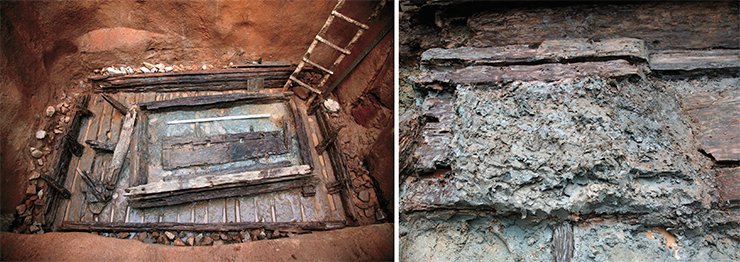
Inside a deep Xiongnu grave hidden in the thickly wooded Sudzuktè pass, on the bottom of the burial chamber, archaeologists, participants of the Russian-Mongolian expedition, found what they had long been searching for: a layer of clay revealing the outline of textile relics. The fragments of the textile found were parts of a carpet composed of several cloths of dark-red woolen fabric. The time-worn cloth found on the floor covered with blue clay of the Xiongnu burial chamber and brought back to life by restorers has a long and complicated story. It was made someplace in Syria or Palestine, embroidered, probably, in north-western India and found in Mongolia.

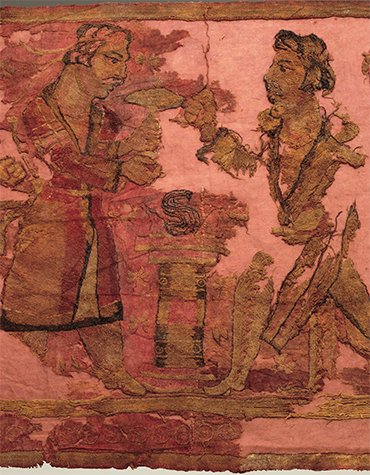
Finding it two thousand years later is a pure chance; its amazingly good condition is almost a miracle. How it made its way to the grave of a person it was not meant for will long, if not forever, remain a mystery. Of greatest surprise though was the unique embroidery made from wool. Its pattern was the ancient Zoroastrian ceremony, of which the principal personage was …a mushroom. In the center of the composition to the left of the altar is the king (priest), who is holding a mushroom over the fire. The «divine mushroom» embroidered on the carpet resembles well-known psychoactive species Psilocybe cubensis.
The weight of evidence suggests that soma, the ancient ritual drink, has been prepared from the mushrooms of family Strophariaceae which contain the unique nervous system stimulator psilocybin
Diggings of 31 Xiongnu tumuli (dated from the late 1st c. B.C. to the early 1st c. AD) of the Noin-Ula burial ground (Mongolia) carried out in 2009 by an expedition of the Institute of Archaeography and Ethnography, Siberian Branch of the Russian Academy of Sciences (SB RAS), have discovered embroidered woolen textiles preserved by a miracle. Their complete restoration is a long way to go; however, the first fragments restored have revealed exceptional information


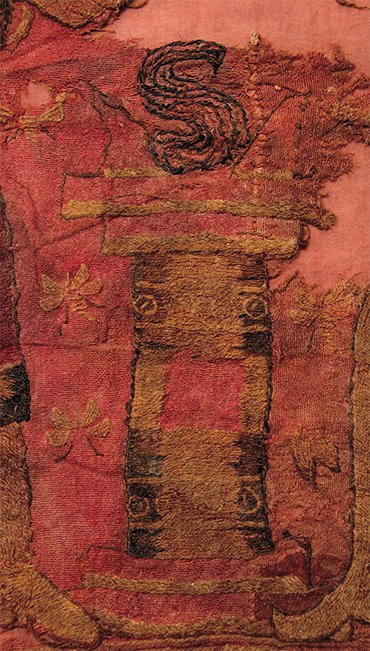
On the altar the flame burns – two tongues on the sides and an S-shaped sign in the middle. The flame of king’s fireplace mounted on the altar is a symbol of royal grandeur
Inside a deep Xiongnu grave hidden in the thickly wooded Sudzuktè pass, on the bottom of the burial chamber, archaeologists found what they had long been searching for: a layer of clay revealing the outline of textile lic
This was the third find to date; all of them were made in the well-known Xiongnu burial ground of Noin-Ula: the first fragments of a unique textile were found here as early as in the 1920s by the expedition of the eminent traveler and scholar P. K. Kozlov. Like many other things, the precious fabrics happened to be in the graves of rich nomads because of the trade along the Silk Road. Xiongnu did not participate in the trade deals but they controlled a long stretch of this perennial spring of foreign goods.


Basing on the first find, the researchers believed that the textile from the Xiongnu burial ground was made in Bactria (Pugachenkova, 1966). However, the finds made in 2006 and 2009 do not allow identifying this textile so unambiguously. Of greatest surprise though was the find made in 2009, or, to be more exact, the unusual pattern involving people and animals embroidered on the textile.

The fragments of the textile found were parts of a carpet composed of several cloths of dark-red woolen fabric. The fabric itself mast have been meant for mantles. A sign of this is the narrow maroon woven stripes with “pockets.” These important ornamental details are known not only from the numerous finds of real textiles in Dura-Europos, Syria, in Palmira and in the Palestinian Cave of Letters, but also from frescos, paintings on Egyptian sarcophagi, and early Christian mosaics (Yadin, 1963).


Similarly to the known mantle textile, the woven stripes of the Xiongnu find do not go from one edge to the other but begin and end within a single cloth. Their cut bits were sewn together without taking into account the location of woven stripes: the ornamental element, so important for making mantles, this time proved to be unnoticed.


The embroidered fabric filled the narrow space between the chamber’s wooden walls and the coffin, which was placed in the middle on another, not embroidered textile. As a matter of fact, the embroidered carpet was laid along the corridor used for the burial ceremony. On top of the fabric was a thick layer of blue clay brought on purpose, which, according to the Chinese tradition was used to make the chamber waterproof. This clay cover made the restorers’ work very hard but preserved the textile.
Beside the altar flame


Men in Iranian dress, equipped with daggers and long swords, approach the fire


The restorers’ hands have revealed the following embroidered plot: a procession to the altar. The altar itself – support for the fire – is a column with a base consisting of two steps and a two-step top turned upside-down. The column shows depictions of circles with a dot in the center – the widespread ancient symbol of fire and the Sun. In the Achaemenid time, similar altars were a novelty introduced by Persians, who proclaimed their adherence to the Zoroastrian belief. “The flame of the king’s fireplace, going upwards in this way, became a symbol of their grandeur.” (Boyce, 1988, p. 75—76).

The altar is aglow with the fire. These Zoroastrian fires had a martial spirit: those who prayed to them were warriors fighting on the side of good creatures against gloom and cold, evil and ignorance.

…Men are approaching the fire. They are armed with daggers attached to the right thigh and long swords with a ring or round pommel and long grip appended to the belt on the left. The warriors are wearing Iranian garments – red trousers, narrow or loose, and closely fitting jackets, wrapped on the left, or longer kaftans. The dress is girdled with a buckled belt and lined with fur.


The warriors’ black voluminous tresses, set in rows and cut at the length of ear lobes, are sometimes strapped across the forehead with a narrow ribbon with fluttering ends. Their looks are conspicuous: expressive profiles of their broad round faces with big eyes, soft chins, pudgy lips and big, slightly aquiline noses. The faces are shaved, though many have a black narrow moustache above the upper lip.

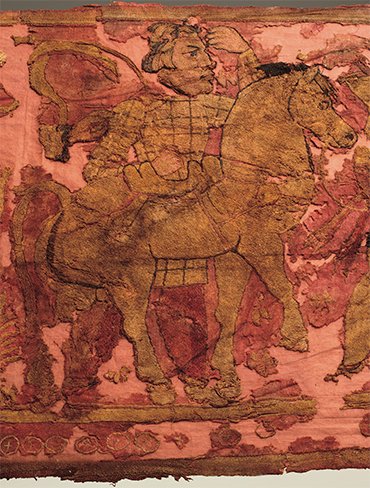
A dismounted rider wearing an armor-clad long jacket with something like a scarf or a cloak fluttering behind his back attracts special attention. His beardless face is stern. The left hand is raised to the forehead in a gesture of adoration common as early as during the Achaemenids as a sign of worshipping a deity. The rider’s horse is held by the bridle by an armed man in a short jacket with something like a scrip on his back from which something like a mushroom is peeking out.

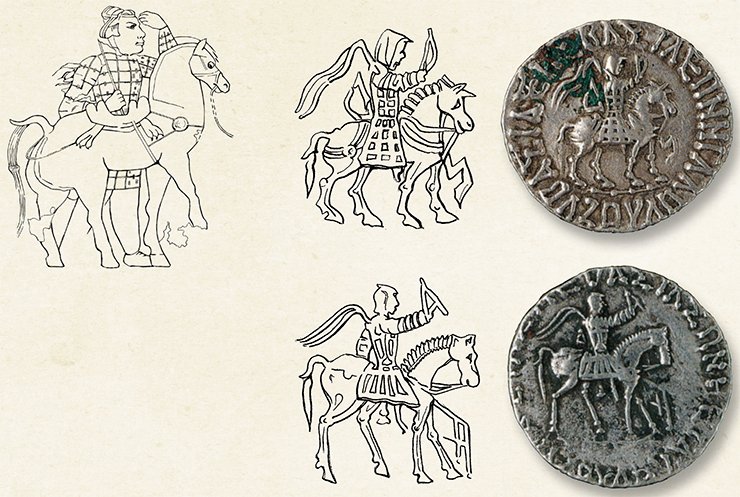
The manner in which the warrior with a horse is depicted copies in minute detail the images on the heads of the coins minted by Indo-Scythian (Saka) kings: Azes I, Aziles и Azis II, who governed north-western India approximately from 57 BC, as well as by their successor Gondofar, the first Indo-Parthian ruler of West and East Punjab (from 20 AD to 46 AD).


A dismounted rider wearing an armor-clad jacket raised his left hand to the forehead in the traditional Zoroastrian gesture – the sing of worshipping a deity (left). Drawing of the carpet by Ye. Shumakova. The depictions of embroidered riders on the carpet and rulers on the heads of Indo-Scythian coins have a great deal in common. On the right are the coins of Azes II, on the left is their drawing. From: (Musee National des Arts Asiatiques-Guimet – l’Asie des steppes d’Alexandre le Grand à Gengis Khan, 2000)

On these coins we can see similar stocky round horses with long tails and strapped docks, cut in a particular manner: a hogged plait at the tail head. Like the embroidered horse, their breast collars are decorated with plates.

The saddle with four horn-shaped supports is identical to the reconstruction made on the basis of Roman archaeological data (Connoli, 2001) with the only difference: instead of leather laces hanging down from under the saddle, there are two clawed paws of a predator’s hide that was used as a horsecloth. These saddles are believed to have appeared by the beginning of the Parthian period and were widely spread with the Parthian cavalry; they were also known to the Sarmatians. Similarly to the embroidered warrior, the riders on the coins are wearing tight waist jackets sewn around with big rectangular plates – such armor was known to the Sakai and Parthians.

These similarities are an important argument in favor of the hypothesis that the carpet shows Indo-Scythians or Indo-Parthians.

Divine mushroom


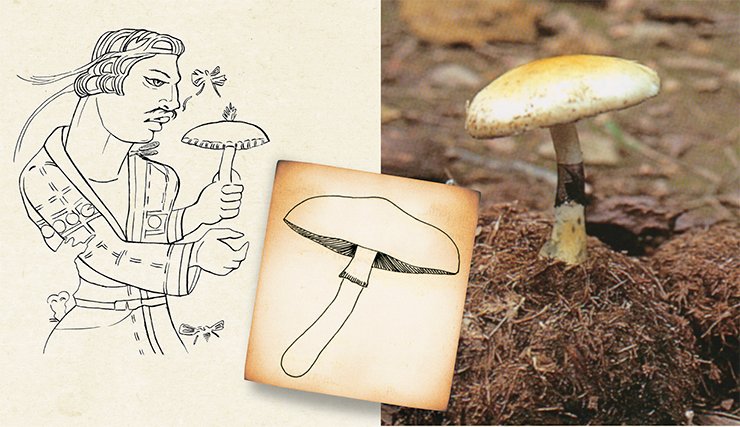
To the left of the altar is the king (priest), who is holding a mushroom over the fire. Opposite him is a warrior in a jacket with a “tail” and a belted quiver The embroidered plot develops further… We can see people standing absorbedly around the altar fire. The most prominent figure among them is the man on the left – probably, the king himself or a priest – dressed in a smart long embroidered kaftan gaping open at the bottom. He has a rarely expressive face, and his intent look is focused on the mushroom he is holding in both hands.

A priest with the Divine Mushroom in his hand... The question of what plant was used to prepare soma, or haoma – the drink of gods ancient Indians and Iranians imbibed has been debated for over a hundred years. Up to now, the plant whose sap was a permanent participant of the rituals, an offering to gods made by ancient Indians and Iranians, has not been identified. The hypotheses are plenty: from ephedra, cannabis, and opium poppy to oriental lotus (e.g., Abdullaev, 2009; McDonald, 2004; et al.). All researchers agree that ancient Indians and Iranians used for cult purposes a drink containing a psychoactive substance – it is only debatable what it was exactly and how it affected the people’s consciousness.

A scene from the Eleusinian Mysteries: Persephone taking a mushroom from Demeter. C. 4th c. BC

The translator and greatest authority on the Rig-Veda (RV) T. Ya. Yelizarenkova wrote: “Judging by the RV hymns, Soma was not only a stimulating but a hallucinating drink. It is difficult to be more particular not only because none of the candidates satisfies all the soma properties and matches the soma descriptions found in the hymns only partially but primarily because the language and style of the RV as an archaic cult monument reflecting the poetic features of ‘Indo-European poetic speech’ is a formidable obstacle to soma identification. The answer may be provided by archaeologists and their finds in north-western India, Afghanistan, and Pakistan (and not in te far-away Central Asia).”

This was written in 1999 – ten years before the outstanding find that testified that Indo-Scythians (Saka) and Indo-Parthians had used mushrooms for cult purposes.


The mushroom depicted on the Xiongnu carpet can belong to family Strophariaceae, according to Candidate of Biology I. A. Gorbunova (Laboratory of Inferior Plants, Central Siberian Botanical Garden, SB RAS, Novosibirsk). Its external appearance has similarities with species Psilocybe cubensis (Earle) Singer [= Stropharia cubensis Earle].


Many species of family Strophariaceae, especially genus Psilocybe, contain psilocybin, a unique psychoactive substance and a nervous system stimulator. The mushrooms having this substance play the leading role in T. McKenna’s psychedelic theory of evolution – one of the most original hypotheses of the origin of humans, their language, conscience, and culture.


priest with the divinmushroom in his hand. Drawn from the carpet by Ye. Shumakova. The “divine mushroom” embroidered on the carpet resembles Psilocybe cubensis in its habit, shape of the cap, and stitches along the cap margin that look like radial folding or veil remnant. Dark inclusions on the stalk may depict the annulus that blackens because of falling spores. The mushrooms of genus Psilocybe, like many other species of family Strophariaceae, contain the psychoactive substance psilocybin. On the left is a king/priest with a mushroom in his hand. Drawing of the carpet by Ye. Shumakova. On the right is the fruit body of P. cubensis, grown on elephant dung (India). From: (Stamets, 1996). In the center is a diagram of P. cubensis fruit body. From: (Guzmán, 1983)

The Eleusinian Mysteries were the oldest religious festivities held in ancient Greece and dedicated to Demeter and her daughter Persephone, spouse to the underworld ruler Hades. The participants of the Mysteries ritually went through death and rebirth. It is known that the initiates were promised rewards in the afterlife. Those who had experienced the mystical death firmly believed that for them a new life would begin after death. “Happy is he who has seen this before sinking into the grave: he knows the end of life and he knows its god-given beginning.” (Pindar)

What particular rites made the initiates think of death with joy is not known. From of old, divulging the secret rituals was punishable by death. It is only known that the initiates were to live through and gain their own religious experience; there is evidence that the participants of the Mysteries had visions of images beyond thought. The prominent philosopher and Orientalist Ye. A. Torchinov puts it straightforwardly: “The Eleusis mystery is the mystery of psycho-technical experience of death and rebirth that purifies and integrates the myst psyche…” (1997, p. 145). To achieve this state, some hallucinogenic substances were used, maybe these contained in mushrooms


“Our remote ancestors discovered that some plants can suppress appetite, relieve pain, supply a sudden rush of energy and immunity towards pathogenic factors, as well as result in a synergy of cognitive powers… Alkaloids in plants, especially the hallucinogenic compounds such as psilocybin, dimethyltryptamine (DMT), and harmaline could be chemical factors in the protohuman diet that catalyzed the emergence of human self-reflection.” (McKenna, 1995).

It should be noted that toadstool (fly-agaric) has been nominated as a candidate for the plant equivalent of soma/haoma. This point of view was supported by the founder of the new science ethnomycology R. G. Wasson in his well-known book Soma: Divine Mushroom of Immortality(1968). However, mushrooms containing psilocybin prove to be much closer to the legendary “drink of immortality” in terms of their psychoactive properties.

Story told by the textile


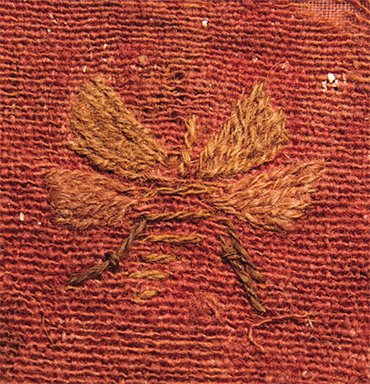
Strewn all over the cloth are the depictions of bees and butterflies. Their presence can symbolize the Other World – the world of souls, the world of ancestors, where warriors get after they have tasted sacred mushrooms
It is high time to sum up the intriguing story unfolding on the time-worn textile. The men depicted on it, who we suppose to be Indo-Scythians (Saka) or Indo-Parthians, are performing a ritual that indicates that they acknowledge a form of Zoroastrianism – a proof of this is the symbol of Ahura Mazda, the sacred fire altar. The mushroom the king (or the priest) is holding in his hands can be an offering to the fire or it can be sanctified by the fire before it being used to make the sacred drink. The north-western India of that time, where, in all the likelihood, the ritual is taking place, was the meeting place of three ethnos, three cultures – Indian, Iranian, and Greek. Each of them had their own gods: tolerance and worshipping not only of one’s own but also of alien gods was a common thing.


To get to the root of the consecration unfolding before us, we should pay attention to such seemingly insignificant details as depictions of bees and butterflies strewn all over the cloth. These insects are the most ancient symbols of worship, and used to have the meaning very different from the present one.

The essence of these symbols of the living natural world, their mythological meaning can be understood through the words denoting them. A bee, for instance, in ancient times was identified with the Word (the first divine creation) and with the fire (soul). In this connection, the Old English beo (bee) can be related to the Indo-European *bhā- denoting, on the one hand, “to speak, word,” and on the other hand, “burn, fire.” In a similar manner, the Persian eng (bee) is related with the Aramaic ogi (soul) and Indo-European *og-en (fire) (Makovsky, 1996). The ancient mythology of many peoples is known to identify bees and people (in some aspects). The bee was Arthemid’s cult insect; Demeter and Persephone’s priestesses were called bees. A bee was the symbol of “honey” Indra, Vishnu, and Krishna. Atharvaveda compares spiritual pursuit with honey-making (Ivanov, Toporov, 1992). The antiseptic properties of honey made it and important means used by many peoples for preserving some foodstuffs, In Mexico, for example, honey has long been used to preserve mushrooms containing psilocybin.
The embroidered cloth covered the narrow space between the burial chamber walls and the coffin. On top of it was a layer of blue clay. Photo by Ye. Bogdanov

In Greek mythology, a butterfly personified Psyche. The Greek word “Psyche” means “soul” and “butterfly.” In fine arts, a soul was often depicted as a butterfly either flying out of a funeral fire or going to Hades (Losev, 1992). The meaning “soul” is often related with the meaning “fire, divine fire.” In Chinese culture, a butterfly is still an emblem of longevity. The insect’s life cycle – caterpillar, cocoon, butterfly – is perceived as a vivid example of metamorphoses leading ultimately to immortality or of a string of rebirths resulting in nirvana (Kravtsova, 2004).


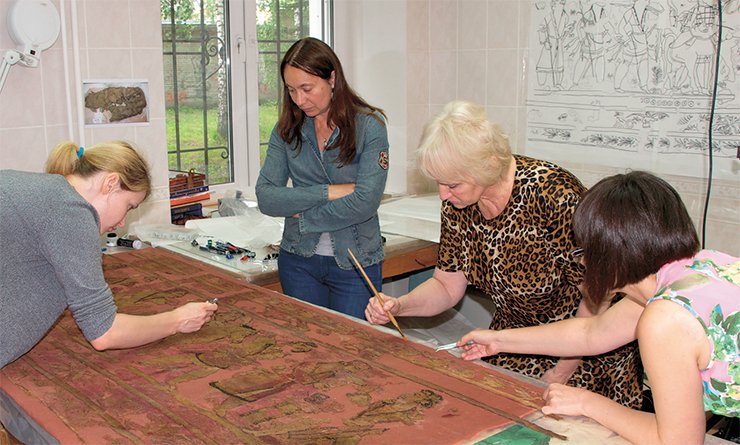
M. V. Moroz, a fine art restorer with the Museum Studies Department of the Institute of Archaeology and Ethnography SB RAS, is engaged in near work: she is removing clay particles from fragments of the cloth

The butterflies and bees depicted on the background of the canvas may have symbolized the kingdom of souls – the Other World – the world of ancestors, where the warriors got to after having consumed sacred mushrooms.
…Now the puzzle fits together. The insects and the mushroom are closely connected and make the surrounding world miraculous. “We drank soma, we became immortal, we came to the light, we found gods.” (Rig-Veda. Mandalas 9—10. VIII, 48.3).

The time-worn cloth found on the floor covered with blue clay of the Xiongnu burial chamber and brought back to life by restorers has a long and complicated story. It was made someplace in Syria or Palestine, embroidered, probably, in north-western India and found in Mongolia.


The unique find is reviving thanks to restorers. From left to right: N. P. Sinitsina, a top grade fine art restorer (textiles and leather), head of the Leather Restoration Group with the Department of Non-Conventional Restoration Technologies at the Grabar All-Russian Art, Scientific and Restoration Center (Moscow); Ye. S. Sinitsina, a fine art restorer with the same department; and O. S. Popova, a fabric restorer with the Pushkin State Museum of Fine Arts (Moscow)

Finding it two thousand years later is a pure chance; its amazingly good condition is almost a miracle. How it made its way to the grave of a person it was not meant for will long, if not forever, remain a mystery.

And yet this is not the greatest enigma posed by the unique find. We were lucky to come across something completely new and out-of-the-ordinary. The border of the academic world was stepped across by unexpected evidence, tangible as the textile that has literally returned to us from the other world in order to continue the story about how a man was becoming Man.

References

Boyce М. Zoroastrians: Their religious beliefs and practices. Мoscow: Nauka, 1988.

Litvinsky B. A. Iranian and East-Hellenic temples of fire // The Hellenic temple of Oxus. Мoscow: Vostochnaya literatura RAN Publishers, 2000. V. 1.

Makovsky М. М. Language-myth-culture. Symbols of life and death. Мoscow: Vinogradov Institute of Russian language, 1996.

McDonald A. A botanical perspective on the identity of soma (nelumbo nucifera gaertn.) based on scriptural and iconographic records // Economic Botany 58 (suppl.). 2004. P. 147—173.

McKenna Т. Food of the Gods. Moscow: Transpersonal Institut Publishers, 1995.

Pugachenkova G. А. Khalchayan. Tashkent: FAN. 1966.

Schmidt-Colinet A., Stauffer A., Al-As Ad Kh. Die Textilien aus Palmyra. Verlag Philipp von Zabern. Mainz am Rhein. 2000.

Wasson R. G. Soma: Divine mushroom of immortality. New York, 1968.

Yadin Y. The finds from the Bar Kokhba period in the Cave of Letters. Jerusalem: The Israel exploration society, 1963.

Yelizarenkova T. Ya. On soma in Rig-Veda // Rig-Veda. Mandalas IX—X. Мoscow: Nauka, Literaturnyie pamiatniki, 1999. P. 323—353.

The photographs used in the publication are the courtesy of M. Vlasenko (Novosibirsk)